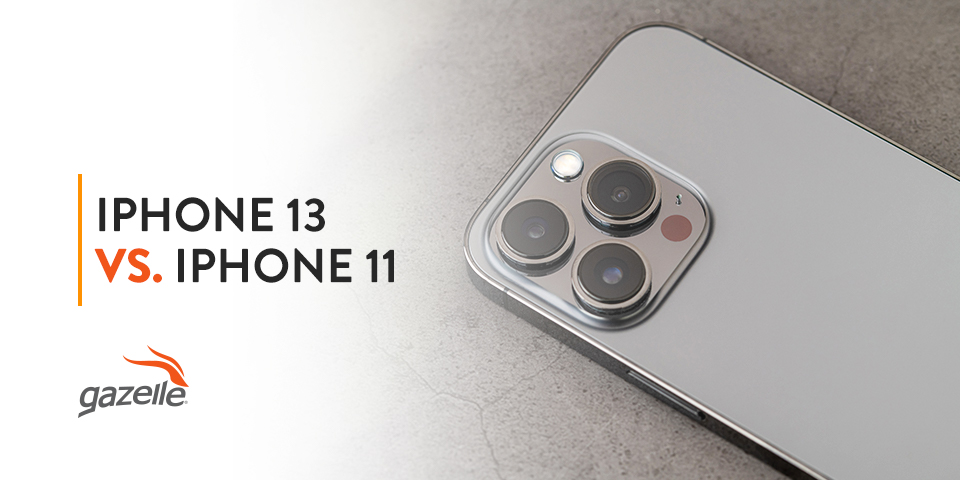

When looking for a new iPhone, it can be helpful to understand the differences between older models that are still widely available, used, or supported. The iPhone 11 and iPhone 13 are two popular options that buyers frequently compare, whether shopping new, refurbished, or secondhand. Released in September 2019 and September 2021 respectively, these two generations have some real differences worth learning about before buying.
As you compare these models, there are a few important things to consider. From display quality to performance and durability, everyone has their own goals when picking a smartphone that fits their needs and budget.

Learn about how the iPhone 13 stacks up against the iPhone 11.
iPhone 13 vs. iPhone 11 Models
Over the years, Apple has released dozens of iPhone models, accumulating over 1 billion active iPhones across the world, and each new release has been accompanied by fresh and fun features that can be hard to keep up with.
Apple introduced the iPhone 11 series in September 2019 and released the iPhone 13 series two years later in September 2021. We’re talking about the main differences between each model in these two series.
iPhone 13 vs. iPhone 11
When looking at the standard iPhone 13 and 11 models, they may seem similar at a glance. But there are actual differences under the hood and in hand.
For starters, the iPhone 13 is noticeably more compact – measuring 5.78 x 2.82 x 0.30 inches and weighing 6.14 ounces, compared to the iPhone 11’s 5.94 x 2.98 x 0.33 inches and 6.84 ounces. The iPhone 13’s notch is also 20% smaller than the iPhone 11’s.
One of the most notable upgrades is the display. The iPhone 11 uses an LCD panel at 1792×828 resolution with 326 PPI and 625 nits of brightness. The iPhone 13 steps up to an OLED display at 2532×1170 resolution, 460 PPI, and 800 nits of brightness – a big improvement in clarity and color accuracy.
Performance is another big differentiator. The iPhone 11 runs on the A13 Bionic chip with 2×2.65 GHz cores. But the iPhone 13 uses the faster A15 Bionic with 2×3.23 GHz cores. The iPhone 13 is also compatible with 5G connectivity, but the iPhone 11 is limited to 4G LTE.
Both models feature two cameras – a wide lens and an ultra-wide lens – but the iPhone 13 adds Cinematic mode and HDR video recording. Battery life is slightly better on the iPhone 13 as well, with a 3,227 mAh battery giving up to 19 hours of video playback versus the iPhone 11’s 3,100 mAh battery and 17 hours.
Both phones are water-resistant, though the iPhone 13 can withstand submersion as deep as 6 meters compared to just 2 meters for the iPhone 11. The iPhone 13 also has Ceramic Shield on the front, giving you four times the drop protection of the iPhone 11. Storage options are more generous on the iPhone 13 as well, starting at 128GB and going as high as 512GB, but the iPhone 11 topped out at 128GB.

iPhone 13 Pro vs. iPhone 11 Pro
The next iPhone in the 13 and 11 series is the Pro model. The iPhone 13 Pro has a bigger display than the iPhone 11 Pro, and both use Super Retina XDR OLED panels. The Pro series is slightly more advanced than the standard models and bigger in size.
Both models feature three types of cameras:
- Telephoto
- Wide
- Ultra Wide
The iPhone 13 Pro’s camera system is more advanced, giving you six times the optical zoom range compared to four times on the iPhone 11 Pro. The iPhone 13 Pro also adds ProRes video recording and Photographic Styles. The Pro model for each series features longer video playback than the standard models, and again, the iPhone 13 series supports 5G while the iPhone 11 series is limited to 4G LTE.
iPhone 13 Pro Max vs. iPhone 11 Pro Max
The Pro Max iPhones are the most advanced models in each respective series. The iPhone 13 Pro Max and iPhone 11 Pro Max share a similar structure to their Pro counterparts, with the same camera systems and connectivity differences mentioned above.
Both the 13 Pro Max and 11 Pro Max give you longer video playback than their standard Pro models. The iPhone 13 Pro Max has a slightly bigger display and an extra color option. Notably, the iPhone 13 Pro Max introduced a one terabyte storage option – the largest available in the iPhone 13 lineup and a first for the iPhone Pro Max series at the time of its release.
iPhone 13 Mini
Unlike the iPhone 11 series, the iPhone 13 lineup includes a smaller option: the iPhone 13 Mini.
The iPhone 13 Mini is slightly bigger than the iPhone SE, Apple’s most affordable model – it has the same Super Retina XDR OLED display technology as the rest of the iPhone 13 series and it’s very similar to the standard iPhone 13 in terms of cameras and 5G connectivity. Its main trade-off is shorter video playback compared to the rest of the lineup, owing to its smaller battery.

iPhone Features to Consider
When comparing iPhone 13 and 11 models, consider these features:
Design and Build
Regarding design and build, there are some notable differences between the iPhone 13 models and the iPhone 11 models. One of the most well-known differences is that iPhone 13 models feature a Ceramic Shield front, which gives four times the drop protection compared to the standard glass front found on the iPhone 11. If you’re worried about screen damage, check out our tips on how to avoid a broken iPhone screen. The iPhone 13 is also more compact and lighter, weighing 6.14 ounces compared to the iPhone 11’s 6.84 ounces. Additionally, the iPhone 13’s notch is 20% smaller than the iPhone 11’s.
The following are the sizes of each model according to height, width and depth:
- iPhone 13: 5.78 inches x 2.82 inches x 0.30 inch
- iPhone 13 Pro: 5.78 inches x 2.82 inches x 0.30 inch
- iPhone 13 Pro Max: 6.33 inches x 3.07 inches x 0.30 inch
- iPhone 13 Mini: 5.18 inches x 2.53 inches x 0.30 inch
- iPhone 11: 5.94 inches x 2.98 inches x 0.33 inch
- iPhone 11 Pro: 5.67 inches x 2.81 inches x 0.32 inch
- iPhone 11 Pro Max: 6.22 inches x 3.06 inches x 0.32 inch
Display
Screen quality is one of the most notable differences between the iPhone 11 and iPhone 13. The iPhone 13 uses an OLED display with a resolution of 2532×1170 at 460 PPI and as high as 800 nits of brightness. But the iPhone 11 uses an LCD Liquid Retina HD display at 1792×828 resolution, 326 PPI, and 625 nits brightness — meaning the iPhone 13 delivers noticeably sharper visuals and a higher contrast ratio of 2,000,000:1 compared to the iPhone 11’s 1,400:1.
Here are the screen sizes and display types for each model:
- iPhone 13: 6.1-inch Super Retina XDR (OLED)
- iPhone 13 Pro: 6.1-inch Super Retina XDR with ProMotion (OLED)
- iPhone 13 Pro Max: 6.7-inch Super Retina XDR with ProMotion (OLED)
- iPhone 13 Mini: 5.4-inch Super Retina XDR (OLED)
- iPhone 11: 6.1-inch Liquid Retina HD (LCD)
- iPhone 11 Pro: 5.8-inch Super Retina XDR (OLED)
- iPhone 11 Pro Max: 6.5-inch Super Retina XDR (OLED)
For users who prioritize display quality, the iPhone 13’s OLED panel has a clear advantage over the iPhone 11’s LCD screen, with sharper resolution, deeper blacks, and higher brightness. If you’re still weighing your options, our guide to the best Apple iPhone model to buy can help you decide.
Colors
Apple introduces different color options for each of its iPhone model releases. The iPhone 13 and iPhone 13 Mini are available in the following colors:
- Midnight
- Starlight
- Blue
- Pink
- Green
- Red
The iPhone 13 Pro and Pro Max are available in different colors, like:
- Alpine Green
- Sierra Blue
- Silver
- Gold
- Graphite
With the standard iPhone 11 model, there are six color options:
- Purple
- Yellow
- Green
- Black
- White
- Red
And the iPhone 11 Pro and Pro Max are available in four color variations, like:
- Midnight Green
- Silver
- Space Grey
- Gold
Cameras and Video Recording
The cameras are a big selling point for iPhones, and each of the iPhone 11 models has a wide and ultra-wide lens. The iPhone 11 Pro and Pro Max have an extra telephoto lens. All three models include the following camera features:
- Night mode
- Deep Fusion
- Depth control
- True Tone flash
The iPhone 13 series cameras are more advanced, and each of the four phones features Cinematic mode and Dolby Vision HDR video recording. The iPhone 13 Mini and iPhone 13 feature a wide and ultra-wide lens. But the 13 Pro and Pro Max add a telephoto lens. The Pro models also give you these capabilities:
- Macro photography
- Night mode portrait
- Macro video recording
- Video slow motion
- Video time-lapse
Bionic Chips and Software
The Bionic chip in Apple iPhones helps save battery life and lets your device perform trillions of tasks per second, like:
- Facial recognition
- Speech recognition
- Video playback
All iPhone 13 models use the A15 Bionic chip, featuring 2×3.23 GHz performance cores. But the iPhone 11 series runs on the A13 Bionic chip with 2×2.65 GHz cores — this generational leap translates to noticeably faster app performance, improved computational photography, and better efficiency.
Both series are compatible with Apple’s iOS software updates. The interface for iPhone 11 and iPhone 13 models is largely the same, though newer devices benefit from 5G connectivity. But iPhone 11 models are limited to 4G LTE.
Performance and Battery Life
Another feature to consider when comparing iPhone 13 and 11 models is power and battery life. Every model has a rechargeable lithium-ion battery. Unlike iPhone 11 models, the iPhone 13 series is compatible with MagSafe accessories and has Ceramic Shield front glass, which has four times the drop protection compared to the iPhone 11.
The following are the video playback hours for each device:
- iPhone 13: Up to 19 hours
- iPhone 13 Pro: Up to 22 hours
- iPhone 13 Pro Max: Up to 28 hours
- iPhone 13 Mini: Up to 17 hours
- iPhone 11: Up to 17 hours
- iPhone 11 Pro: Up to 18 hours
- iPhone 11 Pro Max: Up to 20 hours
And here are the audio playback hours for each device:
- iPhone 13: Up to 75 hours
- iPhone 13 Pro: Up to 75 hours
- iPhone 13 Pro Max: Up to 95 hours
- iPhone 13 Mini: Up to 55 hours
- iPhone 11: Up to 65 hours
- iPhone 11 Pro: Up to 65 hours
- iPhone 11 Pro Max: Up to 80 hours
Storage Capacity
The iPhone 11 comes in two storage options: 64 gigabytes and 128 gigabytes. The iPhone 11 Pro and Pro Max are available in the following storage capacities:
- 64 gigabytes
- 256 gigabytes
- 512 gigabytes
The iPhone 13 and iPhone 13 Mini are available in the following storage options:
- 128 gigabytes
- 256 gigabytes
- 512 gigabytes
In addition to these options, the iPhone 13 Pro and Pro Max are also available with one terabyte of storage — a benefit for users who shoot video or need extra space on their device.
Water Resistance
The final iPhone feature to consider when picking between models is water resistance. Depending on your lifestyle, you might want to go with an option that has greater protection. The following are the depth and time each model can withstand when submerged in water:
- iPhone 11: 2 meters for up to 30 minutes
- iPhone 11 Pro: 4 meters for up to 30 minutes
- iPhone 11 Pro Max: 4 meters for up to 30 minutes
All four models in the iPhone 13 series can endure submersion of 6 meters for up to 30 minutes, which makes them a better choice for those with active or water-adjacent lifestyles.

5 Factors to Consider Before Buying an iPhone 13 or iPhone 11
When comparing iPhone 13 models against the iPhone 11, there are some important things to consider before making your choice. Both are older models no longer in active production. But they remain popular options for budget-conscious buyers. Let’s talk about what to keep in mind:
1. Storage
Before landing on an iPhone model, ask yourself the following:
- Do you store files on the cloud or on your device?
- Do you take a lot of photos and videos?
- Do you stream videos or music using your iPhone?
Storage options can vary meaningfully between these two generations. The iPhone 11 is limited to 64GB or 128GB. But the iPhone 13 has 128GB, 256GB, or 512GB. If you use your smartphone for work or capture media, the iPhone 13’s higher storage ceiling gives you more room to grow without depending on cloud storage.
2. Performance and Display Quality
Consider what kind of iPhone user you are and how demanding your tasks are. The iPhone 13 uses the A15 Bionic chip with 2×3.23 GHz cores, compared to the iPhone 11’s A13 Bionic with 2×2.65 GHz cores – a meaningful difference for gaming, video editing, or multitasking.
Display quality is another area where the two generations diverge. The iPhone 11 uses an LCD screen at 326 PPI and 625 nits brightness. But the iPhone 13 features an OLED display at 460 PPI and 800 nits brightness. If you spend screen time watching videos, browsing, or working from your phone, the iPhone 13’s sharper, brighter display is a real upgrade. Checking your current device’s Screen Time stats helps you gauge how intensive your usage actually is.
3. Budget
Budget is one of the most important things to consider when picking between these two models. The following will affect the cost:
- Storage: More gigabytes of storage will cost more money.
- Generation: The iPhone 13 (released September 2021) is newer than the iPhone 11 (released September 2019), and typically carries a higher price even on the secondary market.
- Condition: Since both models are discontinued, you’ll likely be buying refurbished or pre-owned, so condition plays a big role in pricing.
The iPhone 11 will usually be the cheaper option, which makes it a strong choice if budget is your primary concern. However, the iPhone 13’s improvements in performance, display, and durability may justify the higher cost depending on your preferences. If you’re weighing costs carefully, these tips for finding a cheap phone can help you get the best deal.
4. Size and Durability
The iPhone 13 is actually slightly more compact than the iPhone 11, measuring 5.78 x 2.82 x 0.30 inches and weighing 6.14 ounces, compared to the iPhone 11’s 5.94 x 2.98 x 0.33 inches and 6.84 ounces. If you like a lighter, slimmer feel in hand or pocket, the iPhone 13 has a slight edge despite having a similar screen size.
Durability is another area where the iPhone 13 pulls ahead. Its Ceramic Shield front gives four times the drop protection of the iPhone 11, and it supports water submersion as deep as 6 meters versus just 2 meters for the iPhone 11. If you’re hard on your devices, these differences are worth factoring in – especially if you’re on the fence about a protective case.
5. Colors
Another factor to consider is your visual preference. The iPhone 11 and iPhone 13 were each released in a number of color options, with colors exclusive to certain models or storage tiers. Keep in mind that if you’re looking to use a protective case – which makes sense given the drop protection differences between these two models – it will largely cover your device’s color anyway.
What Apple iPhone Model Is Right for You?
When picking between the iPhone 11 and iPhone 13, it helps to know what sets each model apart so you can find the right fit. The iPhone 11, released in September 2019, remains a budget-friendly option for users who want a reliable smartphone for communication and light use. The iPhone 13, released in September 2021, is the stronger performer – featuring a sharper OLED display (460 PPI vs. 326 PPI), a faster A15 Bionic chip, longer battery life (19 hrs vs. 17 hrs video playback), and better water resistance at as high as 6 meters compared to just 2 meters on the iPhone 11 – it also comes with more storage options, starting at 128GB and going as high as 512GB. But the iPhone 11 tops out at 128GB.
Within the iPhone 13 lineup itself, your choice of model can depend on how you use your phone. If you prioritize portability, the standard iPhone 13 has a great balance of performance and size. Power users and mobile pros will like the Pro and Pro Max models, which add improved camera systems, ProMotion displays, and maximum storage capacity for demanding workflows. No matter your budget or use case, there’s likely an iPhone model that fits – and buying a certified pre-owned device is a way to get premium features at a lower price point.

Looking to Upgrade Your Smartphone? Choose Gazelle.
Whether you’re looking for a recent iPhone model or something a few years old, Gazelle has a number of options available. We make the process fast so you can feel confident that you are getting honest pricing without any hassle.
At Gazelle, we have certified quality devices that are carrier compatible and have a generous 30-day return policy. You never have to worry about hidden fees, contracts, or strings attached when you shop with us.
Are you interested in upgrading your smartphone? Browse our selection of used iPhones!